
Three Things I Learned From the Book of Acts
by Amber Taylor - April 9, 2026
My time at Foundation Institute taught me a lot, but here are a few things I learned when studying the book of Acts.
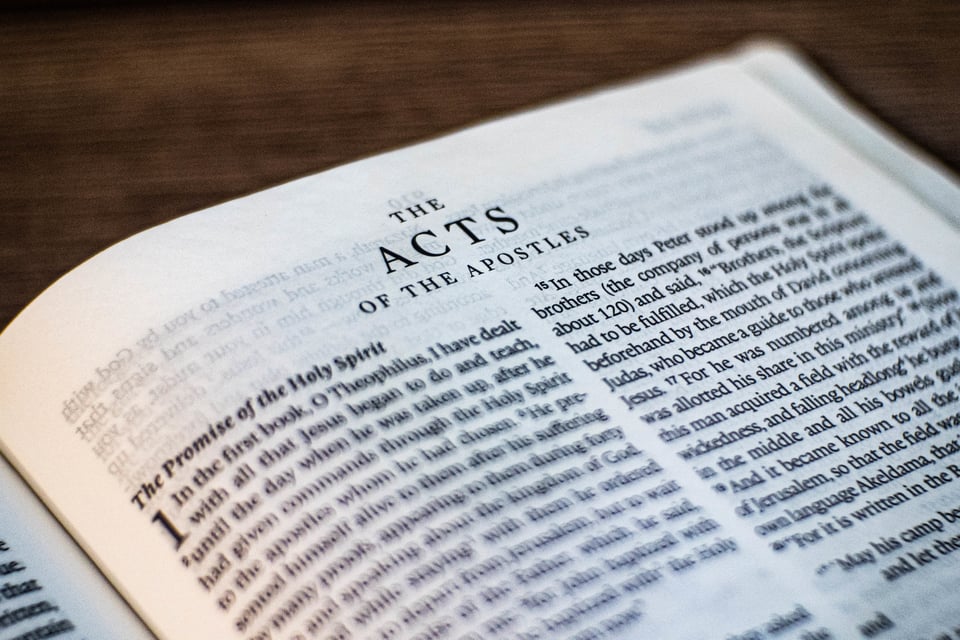
One of the first classes I had when attending Foundation Institute was “Early Church History.” In this class, we studied the book of Acts verse by verse over the course of several weeks.
Although I have several pages of notes and know that there will always be more to learn, I have put together a few highlights.
I would like to share them in this blog post.
1. Our need for God’s Holy Spirit
As you might know, the book of Acts tells the story of God granting His Holy Spirit and beginning His Church.
In Acts 1:4, the Holy Spirit is referred to as “the Promise of the Father.”
God—of His own will—promised to provide us His Spirit to help us walk righteously and to guide us through this life. His Spirit helps us to know what the right decisions are and to make them, which helps us grow into a better friend, a better family member and a better Christian overall.
The followers of Christ—who would become the early Church—didn’t know that they needed the Holy Spirit. But God knew. So, He promised to give it to them. It was a gift given by God, a gift He would continue to give to His called-out ones through the ages.
As the FI class continued through the book of Acts, we saw how the Holy Spirit played a vital role in the lives of God’s people, guiding their understanding of God’s Word. In Acts 4, Peter and John boldly spoke to the public about God’s Word, and “many of those who heard the word believed” (verse 4).
We are individually accountable to God for what we learn, and He grants us His Holy Spirit to help us discern between truth and error. We must always “test all things [and] hold fast what is good” (1 Thessalonians 5:21; see also Acts 17:11).
To learn more on this instruction, read “How to Prove All Things.”
2. God has a plan for each of us
In Acts 7:1-36, Stephen recounts the stories of Abraham, Joseph and Moses. In these accounts, it’s clear that God had a plan for each of them. They acted in faith, following the paths in which God was leading them, even though they didn’t fully comprehend what God was doing.
Abraham left his country simply because God told him to do so, not knowing where he was going. Joseph, a great-grandson of Abraham, was sold into slavery, not knowing that he would be given “favor and wisdom in the presence of Pharaoh” (Acts 7:10). Moses was raised in Egypt, not knowing that God would later use him to bring His people out of Egyptian servitude.
Just like Abraham, Joseph and Moses, we don’t always know how God is going to use us to accomplish His will during our lives. Oftentimes, we just need to trust Him to show us what to do or what to say. When we are in a situation that we have not been able to prepare for, we can trust that God is in control and has a plan.
Similarly, God also makes it clear when He doesn’t want something to occur. In Acts 16:6-7, we are told that Paul, Silas and Timothy were forbidden by the Holy Spirit to preach in Asia and Bithynia. Although they didn’t know why, they obeyed and did not press on to try to teach in those areas.
We likewise should be sensitive to when it’s obvious that God has closed a door that we may have wanted to go through. We may not know all the details as to why, but we trust that He knows what is best. God can see the whole picture, while we cannot. This is why it’s so important to seek and follow God’s will.
The plans of man will come to nothing, but we cannot fight against the plans of God (Acts 5:38-39).
3. We can’t walk the Christian life alone
In our class we also learned about the history of God’s Church. This is important because the principles that the early Church was built upon are the same principles that the Church must be built upon going forward today.
The Church we read about in Acts is the same Church that we belong to today.
Something that particularly stuck out to me is how the early Church members “continued steadfastly” in fellowship with one another (Acts 2:42). They did not and could not walk the Christian life alone, and neither can we. If we want to grow and thrive in our calling, we must make an effort to be around brethren whenever possible.
Paul’s interaction with the disciples shows that spending time with those God has called is part of true Christianity (Acts 14:21-22, 27-28). Without fellowship, we become physically and spiritually isolated. Being with fellow believers strengthens our faith and gives us the courage to stand up for our beliefs.
When it comes to fellow believers, Acts also shows us the history of how the gentiles were accepted into God’s Church. God intended for His truth to be available to all people, not just to an elite group determined by a particular race, status or class.
The Church is ultimately governed by God, so He is the One who determines who receives His calling in this lifetime. That being said, it is important that we treat one another with the kindness and respect that is due all members of God’s family.
What about us?
In Acts 22:1-21, Paul tells the story of his conversion, emphasizing its miraculous nature to demonstrate God was behind it. His life proves that God can work with whomever He chooses, whenever He chooses. When God forgives us and guides us, we can be like Paul and do a complete 180-degree turn and change our lives for the better (Acts 9:20-22).
Our conversion has nothing to do with our past history, our physical lineage or our standing or place in this physical world. Rather, it has to do with God’s decision to call us.
When we answer that call, we can be given the same Holy Spirit that God has given to the other members of His family. That Holy Spirit unites us, and we can walk alongside our fellow believers as we seek to follow His plan.
To learn more about this amazing book, read “Acts of the Apostles.”
Continue Reading

Are You Rotting? A Biblical Perspective on Bed Rotting
by Gabriella Ware - January 14, 2026

“Well, God Knows My Heart”
by Kendrick Diaz - January 7, 2026