
Approaching Your Teachers About God’s Feasts
by Brittany Ebersole - August 21, 2026
As a teen in God’s Church, is it your responsibility to approach your teachers about taking time off for God’s Feast days? What steps can you take to make this process less stressful?
monkeybusinessimages/iStock via Getty Images 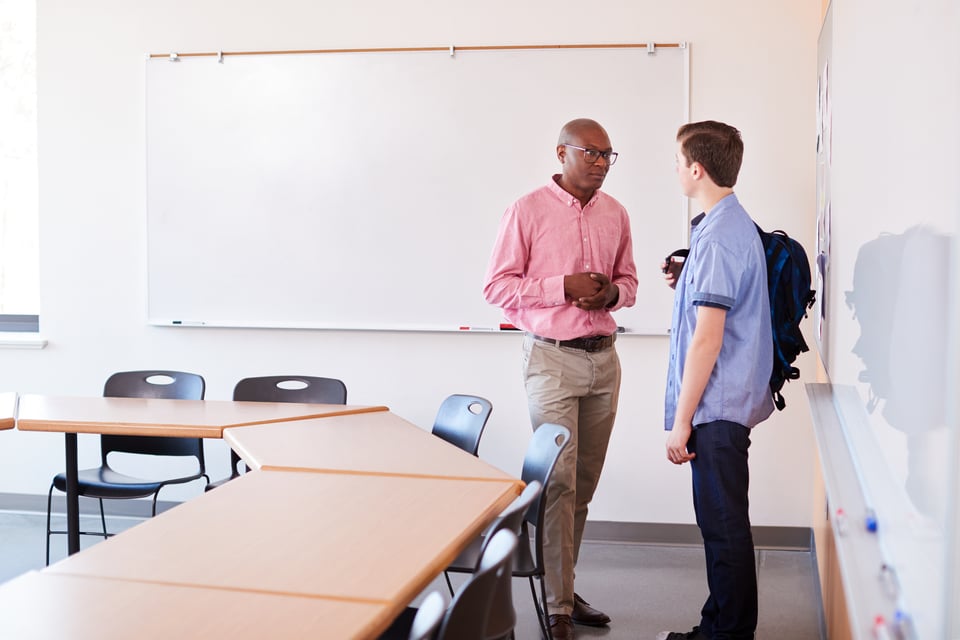
The school year begins. Your heart pounds as you walk through the hallway to your new classes. It’s going to be like this for a while as you get into the groove of the new school year.
Eventually, things settle down. You get more comfortable. But then, a new challenge arises. Just as you’re getting used to your new schedule, it’s time to attend the Feast of Tabernacles.
You know you’ll miss a lot while you’re gone. You’ll also have to tell new teachers (teachers you probably don’t know very well yet) that you’ll be absent for more than a week! This can be a source of additional anxiety.
Perhaps you’ve probably found yourself thinking:
- “I feel like I don’t know my teachers well enough to tell them I’m leaving for the Feast.”
- “They are going to be upset with me for leaving for so long.”
- “I am going to have too much work to do on my own.”
- “I am going to fall behind.”
These are valid feelings, and you aren’t alone in having such concerns.
How can you approach this situation in the best way possible?
Why is it important to personally address your teachers?
It can be intimidating to go to an unfamiliar adult and tell him or her you must leave for a week for a religious observance. Why is it your responsibility to do this? Can’t your parents just do it for you and handle any potential negative feedback? After all, you’re just a teen.
As you grow in your spiritual journey, it’s important that you take opportunities to personally stand up for what you believe. This can help you build your faith in God.
When you were a child, it was natural and appropriate for your parents to take action and speak for you. But the transition into your teen years creates an excellent opportunity for you to take more responsibility and practice stepping out in faith.
This growth in maturity allows chances to build your faith and become a stronger Christian as you approach adulthood, when it’ll be entirely up to you to make decisions and take responsibility for your faith.
Over time, God’s way of life transitions from being something Mom and Dad do, to something you choose to do. It becomes who you are.
Practical advice for approaching your teachers about the Feast
Now let’s talk about some practical ways to make the conversation with your teachers as positive as possible.
As I review some points to consider, I will also offer my perspective as a public school teacher.
You’ll notice that each of these steps involves being proactive. The key is to begin preparing for the Feast of Tabernacles well in advance—not at the last minute.
Build a good reputation
Start by building a good reputation at school. Do your best to be a well-mannered, respectful student who works hard on schoolwork with the right attitude. This is something you can start from the very first day of classes.
The Bible tells us to do everything with all our might (Ecclesiastes 9:10). This includes your least favorite classes and the schoolwork that doesn’t come naturally to you. It isn’t about your skill in the subject. Rather, it’s about having a positive attitude and strong work ethic.
Your teachers will see who you are and the example you set as you try your best in everything. This lays a solid foundation in your relationship with your teachers long before the Feast of Tabernacles conversation comes up.
Communication is key
Proper communication with your teachers is one of the most effective ways to set yourself up for success.
Be proactive, open and honest. Ask questions and make sure you understand what your teachers will need from you. Most of the time, problems arise due to poor communication.
Well before the Feast, ideally during the second or third week of school, it’s a good idea to have an initial conversation with each of your teachers to let them know you’ll be attending a religious observance in a few weeks. (Since the first week of school is typically very busy for a teacher, it’s usually best to wait until after that.) During this conversation, provide the dates you’ll be absent and let your teachers know you’ll share additional details as the Feast approaches.
Letting your teachers know in advance shows respect and consideration for your teachers’ time.
Also make sure to ask your pastor for a Holy Day Excused Absence Form. This is a formal, signed explanation from the Church that explains God’s holy days. Provide copies of this form to your teachers and the school office and ask if they need anything else from you. You may need your parents’ help with this step of the process.
A week or two before leaving for the Feast, it’s a good idea to remind your teachers about your upcoming absence. Discuss the schoolwork you’ll miss and ask your teachers to gather any assignments or topics you’ll need to make up. Also, talk about expectations and agree on when the work should be completed.
Make diligent effort to start on the assignments right away, and set aside time throughout the Feast until you finish them all. This can be challenging, but completing what you promised to do is important in representing God correctly.
God often blesses those who step out in faith like this. As a student, I was almost always ahead of my classmates upon returning from the Feast.
Take initiative with extra homework assignments
Another thing to consider is asking some of your teachers if there are any extra assignments you could complete while at the Feast. Your teachers may see these as making up for things that can’t be assigned as homework.
Perhaps you could connect it to something you will see, experience or learn at the location you’ll keep the Feast. Maybe you could write a paper on something you learned or create a presentation to share with your classmates.
During the Feast of Tabernacles, we have the opportunity to go places we might never be able to go otherwise. You can turn that into a way to go above and beyond and share your experiences with others.
For example, if your family will attend the Feast in Gettysburg, Pennsylvania, you can ask your teacher if visiting one of the area’s Civil War historical sites could count as an educational activity. You could then report back to the class on what you learned from the experience.
I remember there were times in school when I was able to connect something I was learning in class with the site I attended. One time, I was studying art history, and I got to visit the city of Florence the same week my class was studying it!
If your upcoming Feast plans offer a similar opportunity, take the initiative to incorporate your travels into your education. Research the area in advance to find historical sites, museums or other places of educational value, and consider how they could complement what you’re studying in school.
Ask for help
The most important thing you can do before talking with your teachers is pray to God. Ask Him to give you the courage and faith to do what is right. Pray for His favor and ask that your teachers and school district will respond positively and be willing to work with you.
Our loving Father promises to strengthen, guide and help those who diligently seek to obey Him (Isaiah 41:13; Psalm 9:10). He can also give you peace and help you overcome any anxiety you may feel as you face what could be a challenging situation (Philippians 4:6-7).
You can also ask others for help. Ask your parents if they ever faced a similar situation when they were teenagers. If so, they may be able to share what they learned from the experience. Asking for their advice shows respect for their perspective, and they may even be willing to role-play the conversation with you so you can feel more confident about what to say.
Also, don’t forget you’re surrounded by a whole church family of like-minded people who have gone through similar experiences. They would be happy to offer you advice and encouragement.
Face the challenge with courage and faith
Although it may feel stressful, talking with your teachers about your upcoming absence for the Feast is an opportunity to grow in faith and deepen your relationship with God. It gives you the opportunity to trust Him and act on your convictions.
This doesn’t just apply to public school students. Almost everyone will face this situation at some point, whether in college or with a future employer.
When these situations arise, remember these steps:
Build a good reputation, communicate well and take proactive actions with a courteous and respectful attitude. Above all, keep your faith strong and seek God’s guidance.
God will bless you for putting Him first and observing His Feast days.
Continue Reading

Building Our First Love
by Samantha Reams - July 21, 2026

How to Navigate a Tough Job Market
by Gabriella Ware - July 15, 2026